
Learn SEM and SMM in digital marketing: key differences, characteristics, and benefits. Explore this guide to help promote your business online.
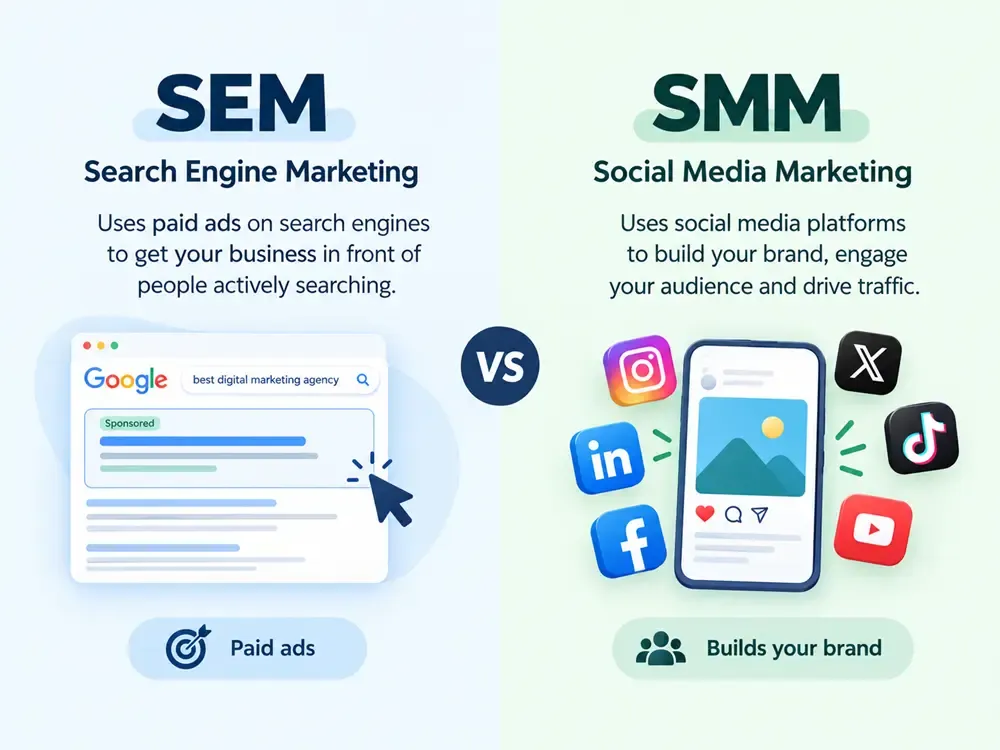
SMM in digital marketing stands for social media marketing: using platforms like Instagram, Facebook, LinkedIn, and YouTube to build awareness, engage people, and bring customers to your business. SEM stands for search engine marketing, which means getting your business in front of people who are actively searching on Google or Bing, usually through paid ads.
Both are core parts of digital marketing, and they are often confused because the abbreviations look alike. The simplest way to remember the difference is this: SEM reaches people who are already searching for what you sell, while SMM helps you reach, grow, and nurture an audience on social platforms, often before they start searching. This guide explains each one, compares them side by side, and helps you decide where to start.
What Is SMM in Digital Marketing?
Social media marketing in digital marketing is the practice of using social media platforms to promote a brand, share content, connect with customers, and drive traffic or sales. Social media marketing includes both free (organic) activity and paid advertising.
The main parts of social media marketing are:
- Organic content: Regular posts, reels, stories, and videos that build your brand and keep followers engaged.
- Paid social ads: Sponsored posts and ads on platforms such as Meta (Facebook and Instagram), LinkedIn, and YouTube, targeted by interests, location, age, and behavior.
- Community management: Replying to comments and messages and building relationships with your audience.
- Influencer and creator marketing: Partnering with people your audience already follows and trusts.
- Social listening: Tracking what people say about your brand, competitors, and industry.
People on social media are usually scrolling for entertainment or updates, not searching for a purchase. That is why SMM in digital marketing works best when you offer content people enjoy, learn from, or trust, rather than only pushing sales messages.
Common goals of SMM: brand awareness, audience growth, engagement, lead generation, customer support, and repeat sales.
Meaning of SEM in Digital Marketing
Search engine marketing, or SEM, is the practice of promoting a website on search engines like Google and Bing so that it appears when people search for related words. In everyday use, SEM mainly refers to paid search advertising, also called pay-per-click (PPC) advertising, where you pay when someone clicks your ad. Some marketers use the term more broadly to include SEO (search engine optimization) as well, so it helps to check how a person or agency is using it.
Here is how a basic search ad works. You choose keywords people might search, write an ad, and set a bid and budget. When someone searches, the platform runs an auction that considers your bid, the quality of your ad, and how relevant your page is. Winning ads appear at the top of the results, marked as ads.
The main SEM ad types are:
- Search ads: Text ads on search results pages.
- Shopping ads: Product listings with images and prices.
- Display ads: Banner ads across websites and apps.
- Video ads: Ads on platforms such as YouTube.
Because search ads target people who typed a specific query, SEM tends to attract visitors with strong buying intent. Someone searching for "dentist near me" or "buy running shoes online" is already looking to act.
SEM vs SMM: Key Differences
FactorSEM (Search Engine Marketing)SMM (Social Media Marketing)Main platformsGoogle, BingInstagram, Facebook, LinkedIn, YouTube, XAudience mindsetActively searching for somethingBrowsing, scrolling, or followingMain goalCapture existing demand and drive clicks or salesBuild awareness, trust, and relationshipsContent formatShort text ads, shopping listingsPosts, reels, videos, stories, adsCost modelUsually pay per clickFree organic posting plus paid adsSpeed of resultsOften quick once ads go liveOrganic growth is gradual, paid ads are fasterTargetingKeywords and search intentInterests, demographics, and behaviorBest forServices and products people search forBrand building, visual products, communitySEM vs SMM: Which Should You Use?
The right choice depends on your business, budget, and goal.
Choose SEM first if:
- Customers already search for what you offer, such as a plumber, clinic, tutor, or repair service.
- You need leads quickly.
- You have a clear product or service page to send people to.
Choose SMM first if:
- Your product is visual, new, or something people don't search for yet, such as fashion, food, or décor.
- You want to build a brand, community, and loyal audience.
- You have the time to create content consistently.
If your budget is small, start with one channel and do it well rather than spreading thin. Most small businesses eventually use both, since they support each other.
How SMM and SEM Work Together
SEM and SMM are stronger as a pair. Think of a customer who sees your Instagram reel, remembers your brand, and later searches for you on Google. Social media created the awareness, and search captured the intent.
Here are practical ways to connect them:
- Retarget social visitors with search or display ads.
- Use search data to find the keywords and questions people ask, then turn them into social content.
- Use social data about which posts perform best to improve ad messaging.
- Keep your message consistent across ads, posts, and your website so customers recognize you.
Getting Started With SMM in Digital Marketing
If you are new to SMM in digital marketing, follow these steps:
- Set a clear goal. Decide whether you want awareness, leads, or sales, since this shapes everything else.
- Choose the right platforms. Pick the one or two where your customers actually spend time, such as LinkedIn for B2B or Instagram for lifestyle products.
- Plan a content mix. Combine helpful, entertaining, and promotional posts, and use short video where it suits your audience.
- Post consistently and engage. Reply to comments and messages, because social media is a two-way channel.
- Measure and adjust. Track reach, engagement, link clicks, and leads, then do more of what works.
Start with organic posting to learn what your audience likes, then add a small paid budget to boost your best content.
Conclusion
SMM in digital marketing, or social media marketing, builds your audience and brand on platforms where people spend their time. SEM, or search engine marketing, captures people who are already searching and ready to act. Understanding the meaning of SEM and SMM helps you spend your budget on the channel that fits your goal, and most businesses see the best results when they use both together.
If you would like help choosing and running the right mix, Kib Technologies works with businesses on social media marketing and search engine marketing. Contact us, and we will suggest where to start.